Tolo is close to so many interesting places in the Peloponnese that one would lose count! Whether interested in prehistoric times, ancient Greek history, modern history or just enjoy being in nature the Argolida is an incredible place to be. The ruins of Ancient Asini, are close to Ninemia Residence and the perfect place to explore close to Tolo. See the renowned Ancient Theatre of Epidavros, an incredible site of culture and art even to this day, while a guided tour in the archaeological site of Ancient Mycenae offers a deep dive in the begginings of ancient Greece. For those who love nature more the coastline offers so many beaches close to Tolo, in totally different settings that it would be almost impossible to visit all of them! If nature & history are not the reason for a visit in Greece, the food, the wine and all the activities in the Peloponnese are sure to make any visitor enjoy life in a unique way.


Ancient Mycenaean Port in Tolo
Only a 20-minute walk from Ninemia in Tolo, Ancient Asini is a compact and fascinating archaeological site perched above the sea. Once a Mycenaean stronghold, it was mentioned in Homer’s Iliad while also being used in later times as well as during the Italian & German occupation of the area. Visitors can walk among the ruins of fortification walls, towers, and tombs, all with stunning views of the Argolic Gulf. Informational signs help bring the history to life, while the nearby pebble beach adds to the site’s charm. It’s an easy and rewarding stop that combines archaeology with a peaceful coastal setting.


Culture & Healing Centre
One of the most iconic archaeological sites in Greece, the Ancient Theatre of Epidaurus is world-famous for its perfect acoustics and it's design in the natural hill. Built in the 4th century BC and seating up to 14,000 people, it continues to host theatre performances during the Athens-Epidaurus Festival. Situated in a beautiful pine forest, it was part of the Sanctuary of Asclepius, a center for healing and worship. Just 35 minutes from Tolo, this UNESCO World Heritage site still has a powerful energy and natural beauty that would make any visitor appreaciative.


A Dominating Mediterranean Force
The legendary city of Mycenae was once the heart of a powerful civilization that dominated in the eastern Mediterranean. It’s famously associated with King Agamemnon and the epic stories of Homer. Visitors can see the Lion Gate, royal "tholos" tombs or beehive tombs, and the massive Cyclopean walls, an important characteristic of their citadels. The on-site museum houses remarkable artifacts, including a gold death mask, "Agamemnon's Mask" and pottery. Only 45 minutes from Tolo and Ninemia Residence, Mycenae offers a connection to the Bronze Age and an interesting perspective at one of the most influential cultures in ancient history.


MIGHTY WALLED TIRYNS
Just outside Nafplio, the citadel of Ancient Tiryns dates back to the 14th century BC and is known for its gigantic Cyclopean walls named so because of the ancient legend said only giants could have moved these massive stones. Tiryns was once a powerful Mycenaean stronghold and is mentioned in Homer’s epics. Though less crowded than Mycenae, it offers an equally impressive look at Bronze Age architecture and urban planning. With its central megaron (palace), fortified gates, and elevated walkways, the site provides a fascinating experience only 20 minutes from Tolo.


Argos Ancient Theatre
The Ancient Theatre of Argos is one of the largest in Greece, with a capacity of up to 20,000 spectators. Built in the 3rd century BC and carved into a hillside, it once hosted music and drama festivals in honor of Dionysus. Its scale is breathtaking, and though not as restored as Epidaurus, it offers a more rugged, untouched experience. Also troll around Argos, visit the number of interesting museums in Argolida such as the unique Byzantine Museum Nearby, visitors can also explore the remains of Roman baths, an agora, and other ancient structures. Located just 30 minutes from Tolo, Argos is well worth the visit for history enthusiasts.


WHERE THE AEGEAN & IONIAN SEAS MEET
An impressive feat of engineering, the Corinth Canal cuts through the Isthmus of Corinth to connect the Aegean and Ionian Seas. Though only 6.4 km long and 21 meters wide, it's dramatic sides cut through solid rock, creating steep cliffs that drop more than 70 meters to the water. Completed in 1893, althought the idea had been around since ancient Greece, the canal shortened sea routes but also became a popular tourist stop. Visitors can view it from the bridge above or try bungee jumping for a thrill or combine it with a day trip to Ancient Corinth




WEALTH & POWER IN ANCIENT GREECE
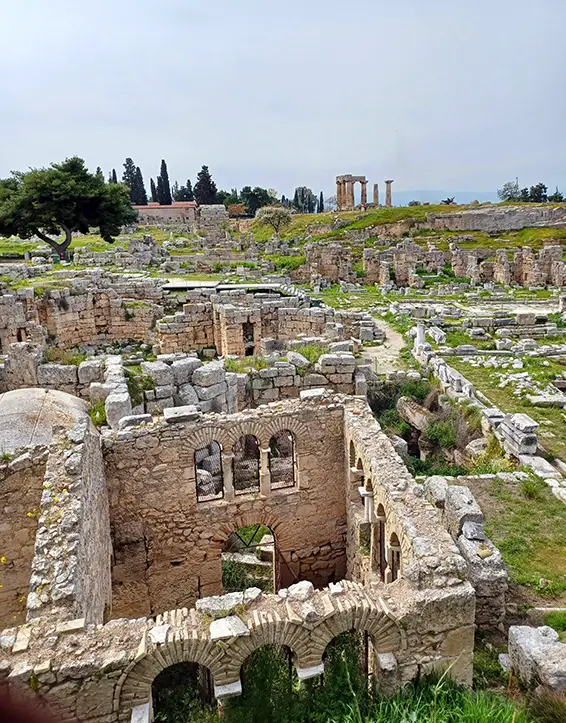
Located at the crossroads of mainland Greece and the Peloponnese, Ancient Corinth was once a powerful city-state and trading hub. The site features a vast archaeological area with highlights including the Temple of Apollo, the Roman Agora, and remnants of fountains and shops. The nearby Acrocorinth—a fortified hill—offers panoramic views and a deeper look into the area's strategic importance. The museum on-site holds artifacts from all periods of Corinthian history. Ancient Corinth gives a strong sense of the city’s former power and its role in Greek, Roman, and early Christian history.




A PLACE OF WINE AND MYTH
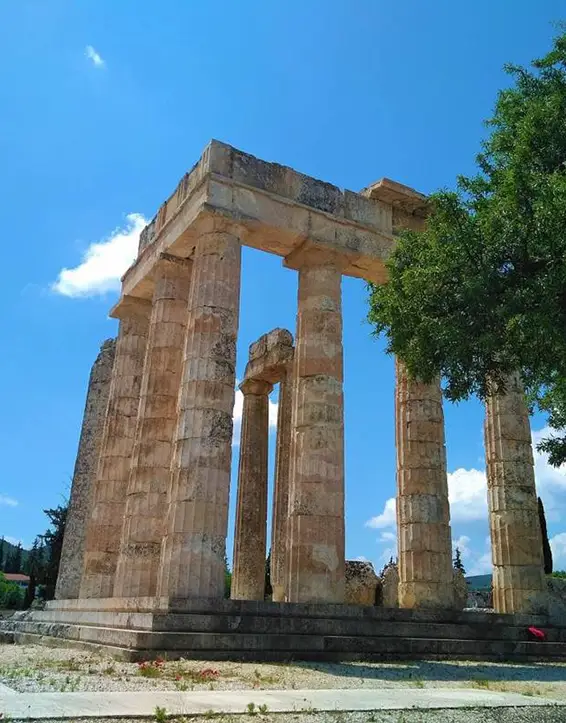
Ancient Nemea is a remarkable archaeological site set in a valley surrounded by vineyards and hills. In classical times, Nemea was a major religious center and the location of the Nemean Games, which were held in honor of Nemean Zeus. Today, visitors can walk among the striking columns of the Temple of Zeus, explore the ancient stadium with its restored vaulted entrance, and visit the small but informative museum nearby. The site is quiet and uncrowded, offering a more personal experience of Greece. Combined with a visit to nearby wineries famous for the 'Agiorgitiko' variety, Ancient Nemea makes for a great destination for an excursion.


A HIDDEN BYZANTINE MONASTERY
Built into the side of a cliff close to the village of Iria, the Monastery of Agiou DImitriou Avgou is a quiet site surrounded by nature. Dating back to Byzantine times, the monastery was once an important religious site and a defensive structure. Though now abandoned, its dramatic setting and preserved structure make it a great place to visit in the Tolo area. The way to the monastery involves a drive through the Greek countryside and a short hike, making it perfect for those looking for a more exciting experience and something less popular. The views from the site are stunning, and the calming atmosphere invites a sense of peace.


AN ISLAND OF TRADING AND RESISTANCE
Spetses is a lively island with a proud maritime tradition and a long history. Famous for its role in the 1821 revolution, the island honors heroine Laskarina Bouboulina, whose home is now a museum. The town has a charming harbor, neoclassical buildings, and plenty of tavernas, boutiques, and bakeries. Horse-drawn carriages are still a popular way to get around, adding to the island’s nostalgic feel. Beaches like Agia Marina and Agioi Anargyroi are easily reached by boat or bike. Spetses combines culture, beauty, and island energy, all within easy reach of Tolo.


A TRADITIONAL GREEK ISLAND
Hydra is a car-free island known for its elegant stone mansions, rich naval history, and artistic atmosphere. Just a short boat ride from the Peloponnese, it’s a popular day trip destination with charming waterfront cafés, boutique shops, and narrow cobblestone streets. The island played a key role in the Greek War of Independence and still retains much of its 19th-century character. Visitors often enjoy walks along the coastal path, swimming in clear waters, or exploring small museums. Its peaceful pace and preserved architecture make Hydra both relaxing and visually striking..